
Best camera for travel: seven picks by trip and carrying style
Choose the Fujifilm X-S20 for a flexible family travel kit, the X100VI for a fixed-lens city trip, or the Tough TG-7 when shallow-water use defines the journey.

This guide draws on manufacturer documentation and independent reviews.
Start with the Fujifilm X-S20 for a family trip that mixes photographs and video. Its interchangeable lenses give you more framing options than a fixed-lens compact. Choose the lens before judging whether the kit is practical to carry.
For city walks, the X100VI or standard color Ricoh GR IV can be a better fit if you are happy with one view. Choose a supported OM-5 Mark II kit for weather-resistant hiking, or the Tough TG-7 for shallow-water use. Those are different needs, and no camera here is the best answer to all of them.
Purchase links are Amazon.com affiliate searches; we may earn a commission from qualifying purchases. Check the exact model, condition, seller, delivery date, included power accessories and regional warranty. Compact-camera listings can have delayed delivery. Interchangeable-lens recommendations are body only; fixed-lens picks include their lens.
Compare by the trip you are taking
Choose by the trip first. For interchangeable-lens picks, include the lens and spare power when comparing size and weight.
| Camera | Travel branch | What to settle before packing | Main compromise |
|---|---|---|---|
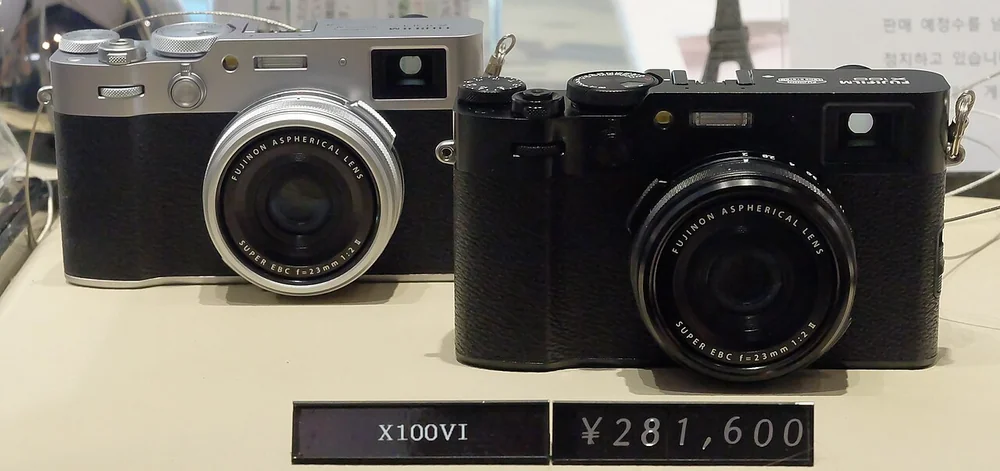
| Fujifilm X100VI | Fixed-lens city trip | Accept about 35 mm-equivalent framing | Cannot change to a conventional zoom |
| Ricoh GR IV | Wide fixed-view city walks | Accept about 28 mm-equivalent framing | No built-in viewfinder or weather sealing; fixed screen |
| Fujifilm X-S20 | Family stills and video | Choose an actual travel lens | One card slot; micro HDMI |
| OM System OM-5 Mark II | Weather-resistant hiking kit | Verify compatible sealed lens | 20 MP-class resolution; no animal, bird or vehicle detection |
| OM System Tough TG-7 | Shallow-water compact | Follow 15 m rating conditions and instructions | Small 12 MP sensor limits detail and low light |
| Sony a6700 | Video-aware travel hybrid | Check lens framing in cropped modes | Possible video overheating |
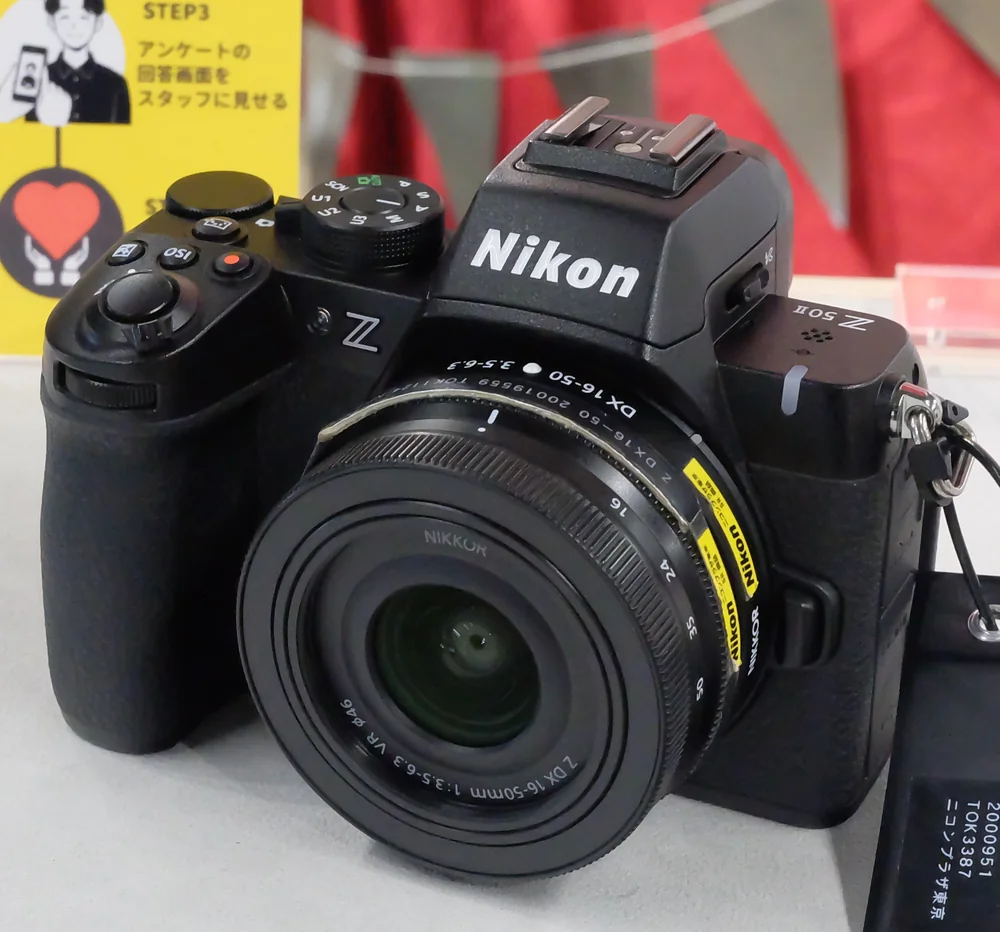
| Nikon Z50II | Viewfinder and flip-out-screen kit | Plan power and exact lens choice | Mediocre battery life; cropped 4K/60p |
Seven cameras for distinct travel needs
Fujifilm X100VI
Check Fujifilm X100VI on Amazon.com
Choose the X100VI for city trips where you enjoy working with one view. Its fixed 23 mm f/2 lens gives about 35 mm-equivalent framing, meaning the same view as a 35 mm lens on a full-frame camera. Fujifilm lists a 40.2 MP APS-C sensor and five-axis stabilization to reduce blur from camera shake.
You have no separate lens to pack, but you also cannot switch to a conventional zoom for a distant detail. DPReview reports autofocus and edge consistency below the best interchangeable-lens systems. Accept that limitation before buying, and check that the camera fits your preferred bag or pocket.
Ricoh GR IV
Product photo loads from Amazon when available.
Check Ricoh GR IV on Amazon.com
The standard color GR IV is the wider city-walk option. Its fixed 18.3 mm f/2.8 lens gives about 28 mm-equivalent framing, so you include more surroundings than with the X100VI. Ricoh lists a 25.74 MP sensor, five-axis stabilization, about 53 GB of internal storage and a microSD slot.
It uses USB-C charging, but the battery is rated for only about 250 images under Ricoh’s test conditions. Plan power for long days. This pick is the standard color version, not HDF or Monochrome.
Choose it for wide city scenes rather than rain-exposed hiking. TechRadar reports no weather sealing, viewfinder or built-in flash, alongside occasional autofocus hesitation. The fixed screen can be hard to see in bright light. If you often photograph distant subjects you cannot approach, choose a camera with lens flexibility instead.
Fujifilm X-S20

Check Fujifilm X-S20 on Amazon.com
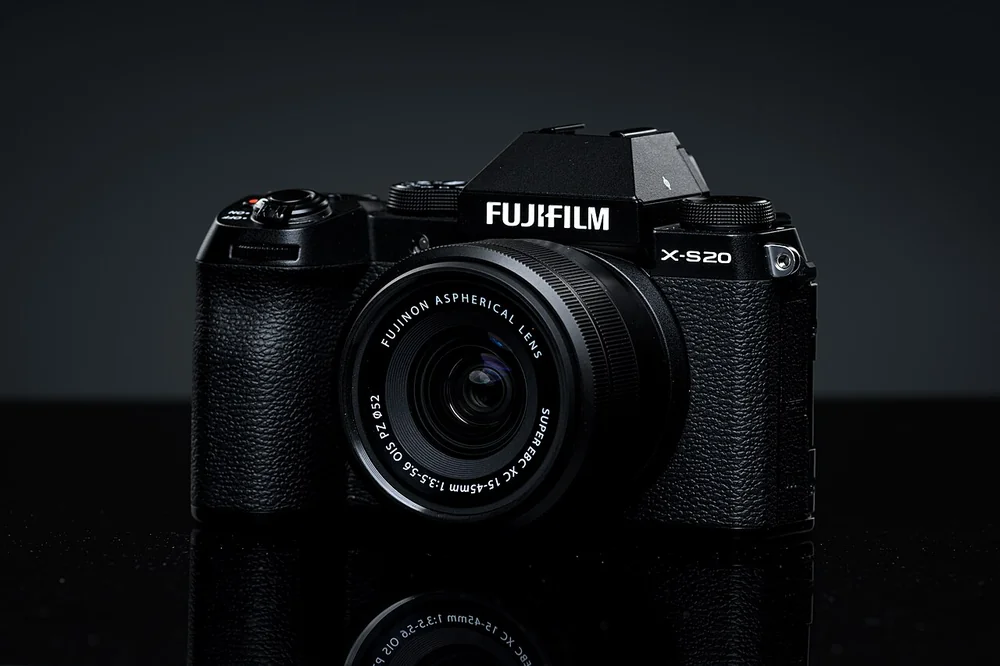
The X-S20 is the strongest starting point here for a varied family itinerary. You can choose lenses for the photographs you want instead of forcing everything into a single fixed view. Fujifilm lists a 26.1 MP APS-C sensor and five-axis stabilization.
PCMag notes one UHS-II memory-card slot, so there is no simultaneous two-card backup. Its micro HDMI socket also needs more care than a full-size connector if you attach recording equipment. For ordinary travel use, the bigger buying decision is the lens and total kit cost.
Fujifilm lists focus bracketing, which takes photographs at different focus distances. Do not assume that means the camera can merge them into a finished sharp-throughout image without checking the workflow.
OM System OM-5 Mark II
Product photo loads from Amazon when available.
Check OM System OM-5 Mark II on Amazon.com
Choose the OM-5 Mark II for hiking with a compatible sealed lens. OM System lists IP53 body protection under its conditions, five-axis stabilization and USB-C charging. Weather resistance does not make it an underwater camera.
Amateur Photographer confirms the updated menus and USB-C connector. Single-shot resolution remains in the 20 MP class, and autofocus includes face and eye detection but no animal, bird or vehicle detection. That is a meaningful drawback if wildlife is the reason for your trip.
Check support before mixing Micro Four Thirds brands. A lens can fit without supporting coordinated stabilization or the camera’s computational functions.
OM System Tough TG-7

Check OM System Tough TG-7 on Amazon.com
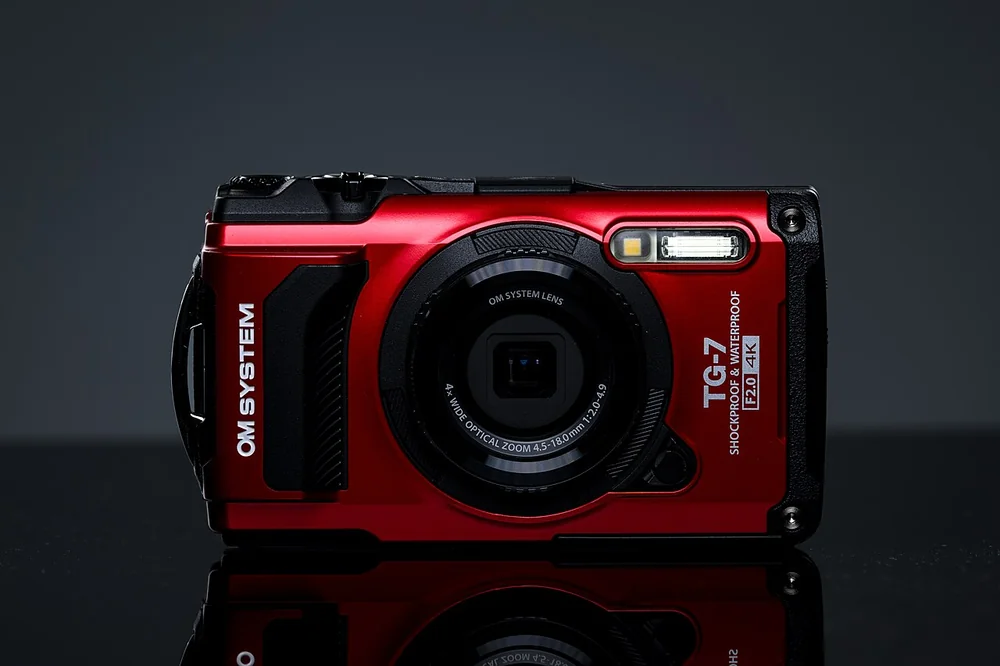
The TG-7 is the pick for shallow-water activities, provided you follow OM System’s instructions. It has a 12 MP sensor and a waterproof rating to 15 m under specified conditions. The manual recommends replacing waterproof seals annually and warns that impacts can compromise protection. Read the underwater-use and cleaning instructions before taking it into water.
You give up image quality for that use. Tom’s Guide reports limited detail and low-light performance from the small sensor, plus 4K video limited to 30 frames per second and rolling-shutter distortion during motion. Choose another camera if dim interiors or detailed photographs are your priority.
OM System also lists focus bracketing and stacking modes for combining photographs focused at different distances. Those close-up options do not remove the small sensor’s broader limitations.
Sony a6700
.jpg)
Check Sony a6700 on Amazon.com
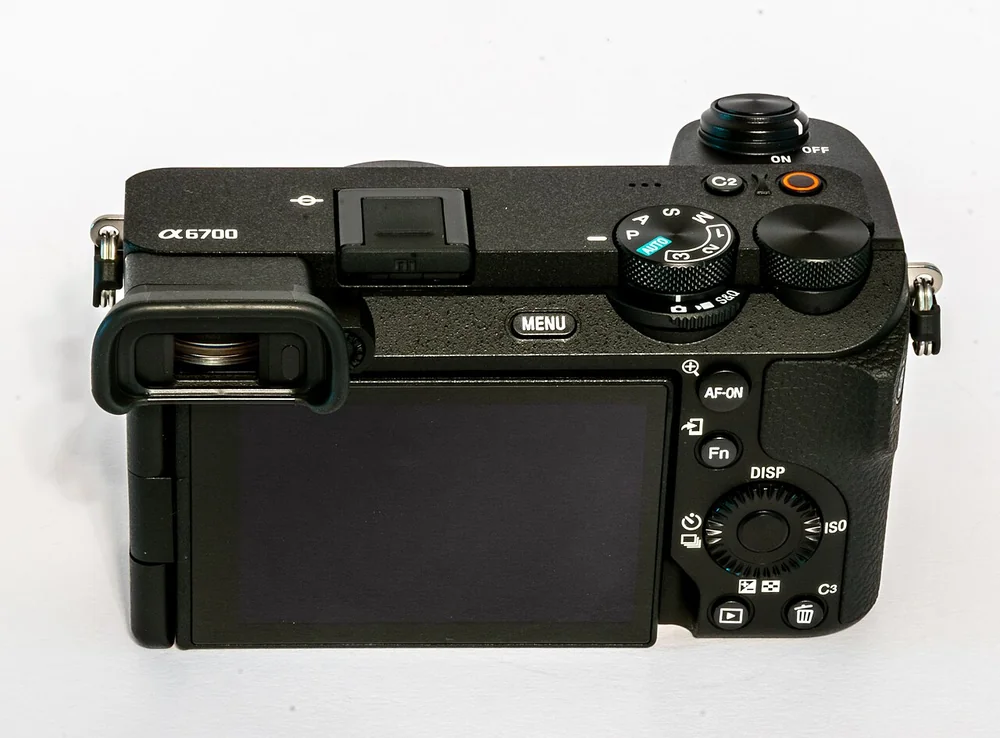
The a6700 is worth choosing when video is a substantial part of the trip. Sony lists a 26 MP APS-C sensor, five-axis stabilization and 4K at 120 frames per second for slow-motion footage. That mode crops the view, so confirm that your lens still frames the shot you want.
PCMag reports possible overheating during video, one SDXC slot, no focus joystick and an 11-frame-per-second tracking limit. If you plan long recordings in warm weather, the heat warning is more important than the slow-motion option. Choose the lens and power setup around your actual recording plans.
Nikon Z50II

Check Nikon Z50II on Amazon.com
Choose the Z50II if you want both an eye-level viewfinder and a flip-out screen. Nikon lists a 20.9 MP DX sensor, its APS-C format, with full-width 4K at 30 frames per second and cropped 4K at 60.
PCMag’s battery-life caution makes spare-power planning important for a full sightseeing day. The review also notes no focus joystick and JPEG-only pre-capture, which saves frames from before you fully press the shutter but does not give you RAW files in that feature. Check the lens’s stabilization support before buying the kit.
Decide what will stay in your bag
Compare a whole kit, not a body specification
Write a packing list with the actual lens, spare power, memory cards, protection and cables. Then compare the size and weight of that kit. A fixed-lens camera simplifies packing, but you still need to check whether it fits your bag comfortably. Our beginner camera guide explains viewfinders and stabilization if this is your first lens system.
Match protection to the activity
City walking, rain-exposed hiking and shallow-water use are distinct conditions. The OM-5 Mark II rating requires a compatible sealed lens and manufacturer conditions. TG-7’s water specification also has conditions. Do not convert a weather-resistant body into an underwater recommendation, and do not infer a water rating for an unverified model.
Plan charging before the first long day
Confirm the charging method and included power accessories before departure. OM-5 Mark II and GR IV use USB-C charging, but a connector alone does not tell you how long a charge will last. Ricoh rates GR IV for about 250 images under test conditions, and PCMag flags Z50II battery life. Follow the relevant manual when choosing spare power.
Choose flexibility you will actually use
A fixed-lens camera can be the right choice for someone happy with a consistent view. It can be a poor choice for a trip dominated by distant wildlife or details. If you want several views, choose the lens kit before ranking the body. Do not pack extra lenses simply to justify having bought an interchangeable-lens camera. For mostly city walks, our street-photography camera guide compares fixed 28 mm- and 35 mm-equivalent framing and screen-based composition in more detail.
Travel-camera questions
Can one camera cover city walks and water activities?
Only if its documented protection and imaging compromises match both jobs. TG-7 is the water-use branch in this evidence set. It is not the top detail or low-light choice, so that flexibility comes with a cost in capability.
Should I choose X100VI or GR IV?
Start with framing. X100VI is approximately 35 mm equivalent; GR IV is approximately 28 mm equivalent. GR IV lacks a built-in viewfinder and weather sealing, and its fixed screen can be difficult to see in bright light. Neither offers conventional lens changes.
Is OM-5 Mark II waterproof?
No waterproof claim is established here. Its IP53-rated body requires manufacturer conditions and a compatible sealed lens. Do not submerge it on the basis of that rating.
Which kit is lightest?
There is no verified lightest-kit ranking here. Compare the actual lens and accessories, not a body-only weight against a fixed-lens camera.
Should I buy before departure through any matching search result?
Check the exact model, variant, included items, seller, warranty and delivery first. Leave time to learn the controls and confirm the kit works as intended. These Amazon searches are destinations, not proof of current availability.
Which travel camera should you buy?
Choose X-S20 for a flexible family kit, X100VI or standard color GR IV for city walks with one fixed view, OM-5 Mark II for hiking with a compatible sealed lens, and TG-7 for shallow water under its stated conditions. Choose a6700 when video matters more, or Z50II when its viewfinder and flip-out screen suit you. Leave time before departure to learn the controls and check the kit.
Sources and specifications
Manufacturer documentation supports the specifications; exact-model reviews support the reported drawbacks. Prices, stock, regional warranty, complete-kit weights and comparative battery endurance were not verified.
- Fujifilm X100VI specifications
- DPReview X100VI review
- Ricoh GR IV specifications
- TechRadar GR IV review
- Fujifilm X-S20 specifications
- PCMag X-S20 review
- OM System OM-5 Mark II product page
- Amateur Photographer OM-5 Mark II review
- OM System TG-7 product page
- TG-7 manual, pages 231 to 233
- Tom’s Guide TG-7 review
- Sony a6700 specifications
- PCMag a6700 review
- Nikon Z50II manual
- PCMag Z50II review
Related guides
Best camera for beginners: seven choices for learning photography
Compare seven beginner camera candidates by viewfinder, stabilization, learning controls and lens-system commitments, with clear drawbacks and research sources.
Best camera for landscape photography: detail without the wrong kit
Seven research-based landscape camera picks, comparing single-shot detail, lens-system choices and field workflow without unsupported dynamic-range rankings.
Best camera for portraits: choose for the session, not skin-tone claims
Seven portrait cameras for learning, controlled sessions and hybrid work, with lens-system tradeoffs, useful drawbacks and lighting checks before buying.