
Best camera for street photography: fixed-lens and flexible choices
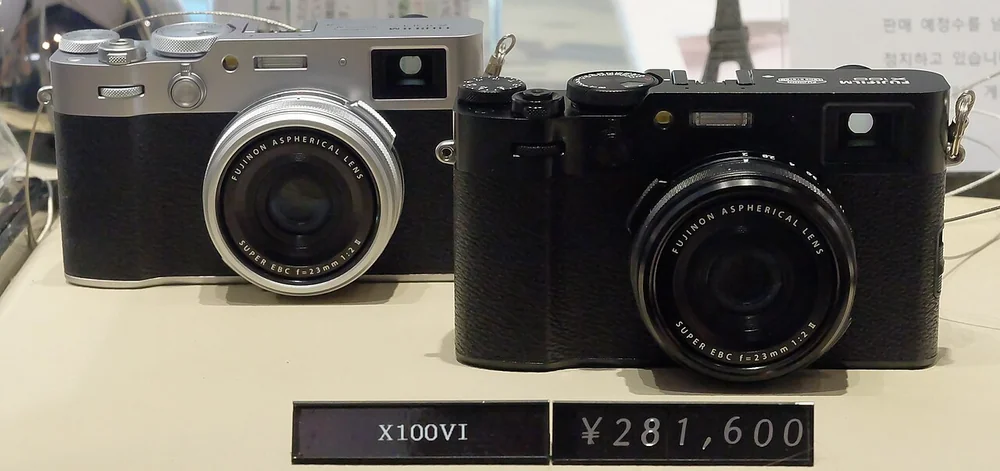
Start with the standard color Ricoh GR IV for a fixed 28 mm-equivalent approach, or choose the Fujifilm X100VI when its 35 mm-equivalent framing fits your street photographs better.

This guide interprets published documentation and reviews.
Choose the standard color Ricoh GR IV if you like wide street scenes and composing on a screen. Choose the Fujifilm X100VI if you prefer a tighter view. Their lenses give roughly the same framing as 28 mm and 35 mm lenses on a full-frame camera, respectively. Those equivalent numbers describe the view, not the physical lens size.
Neither camera lets you swap lenses. If you are still discovering which framing you enjoy, start with an interchangeable-lens camera instead. The best choice is the one that suits the pictures you want to make, including how you focus and carry it.
Amazon.com links are affiliate searches; we may earn a commission from qualifying purchases. Check the model, variant, condition, seller, delivery date and regional warranty before ordering. GR IV and X100VI listings can have delayed delivery. These two picks include a fixed lens; the other recommendations are body only.
Compare the street-photography decisions
Compare interchangeable-lens cameras with the lens you plan to use. A small body does not necessarily make a small street kit.
| Camera | Street approach | Framing commitment | Main friction |
|---|---|---|---|
| Ricoh GR IV | One wide fixed view | About 28 mm equivalent | No built-in viewfinder or weather sealing; fixed screen |
| Fujifilm X100VI | One tighter fixed view | About 35 mm equivalent | Fixed lens limits flexibility |
| Fujifilm X-T5 | Interchangeable-lens stills with detail | Pick an XF or XC lens | Tracking and face/eye AF lag rivals in review |
| Fujifilm X-M5 | Screen-only lens flexibility | Pick an XF or XC lens | No IBIS or viewfinder |
| Nikon Zf | Full-frame Z lens kit | Choose full-frame coverage | No AF joystick; handling caution |
| OM System OM-5 Mark II | Outdoor street kit | Check Micro Four Thirds lens support | 20 MP-class resolution; no animal, bird or vehicle detection |
| Sony a6700 | Stills with occasional video | Choose an E or FE lens | No focus joystick; video heat risk |
What each camera earns its place for
Ricoh GR IV
Product photo loads from Amazon when available.
Check Ricoh GR IV on Amazon.com
The standard color GR IV is for wide compositions that include the street around your subject. It has a 25.74 MP APS-C sensor and a fixed 18.3 mm f/2.8 lens, giving about 28 mm-equivalent framing. Five-axis stabilization moves the sensor to reduce blur from your hands. It cannot freeze a moving pedestrian.
Ricoh lists about 53 GB of internal storage alongside a microSD slot, and rates the battery for about 250 images under its test conditions. Plan spare power for a long walk.
The bigger question is whether you can live with screen-only composition. TechRadar reports a fixed screen that is hard to see in bright light, sometimes sluggish autofocus, and no weather sealing or built-in flash. Choose it for wide scenes, not distant details or dependable tracking of fast movement. This recommendation is the standard color model, not HDF or Monochrome.
Fujifilm X100VI
Check Fujifilm X100VI on Amazon.com
Choose the X100VI if the GR IV’s view feels too wide. Its fixed 23 mm f/2 lens gives about 35 mm-equivalent framing, so you include less of the surroundings from the same position. Fujifilm pairs it with a 40.2 MP APS-C sensor and five-axis stabilization.
That higher resolution is useful if detail matters to you, but it is not a reason to ignore the lens constraint. You cannot add a conventional zoom later. DPReview also found autofocus and image consistency toward the edges below the best interchangeable-lens systems. Buy it for the framing you enjoy, rather than expecting it to do every job.
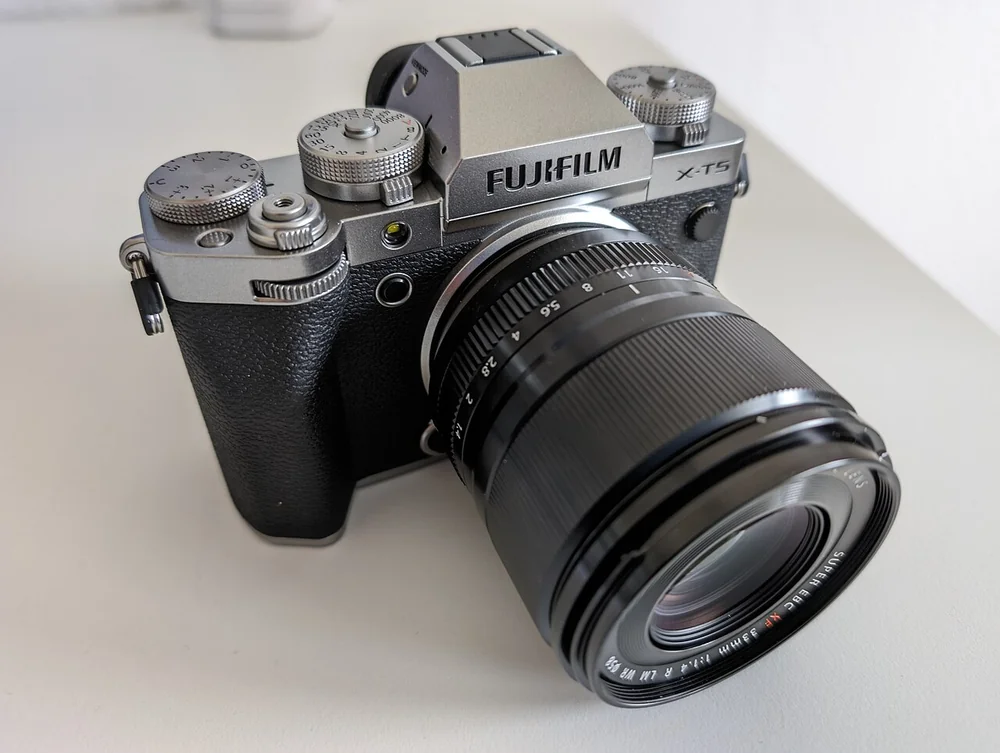
Fujifilm X-T5

Check Fujifilm X-T5 on Amazon.com
The X-T5 is the choice for detailed stills without committing to one lens. Fujifilm lists a 40.2 MP APS-C sensor, five-axis stabilization and mechanical bursts of 15 frames per second. Choose an XF or XC lens before judging the kit’s size.
It makes more sense for deliberate compositions than as a default for people moving unpredictably toward you. DPReview found tracking and face/eye autofocus behind rivals. Its HQ video modes also narrow the view and can distort moving subjects through rolling shutter, where different parts of a frame are captured at different moments.
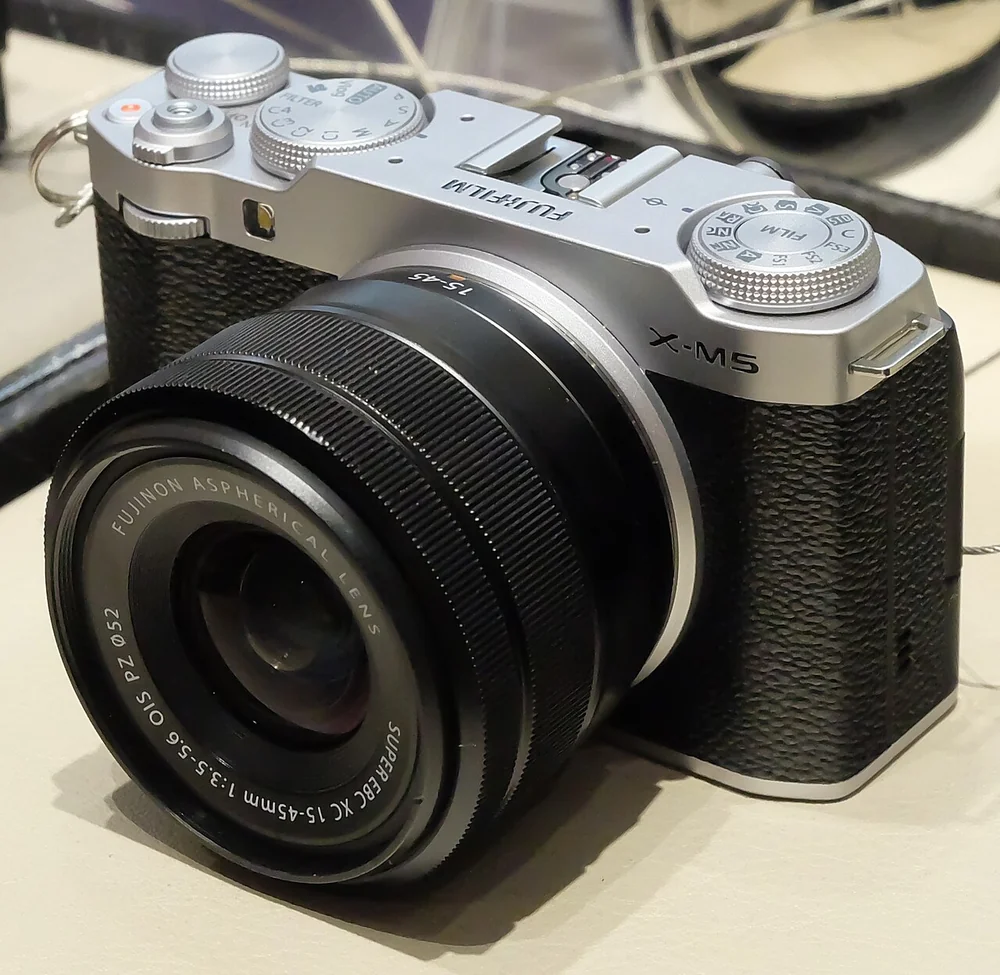
Fujifilm X-M5

Check Fujifilm X-M5 on Amazon.com
Choose the X-M5 only if you are happy composing on a screen. It gives you X-system lens choice and a 26.1 MP APS-C sensor, but no viewfinder or in-body image stabilization, often shortened to IBIS. That makes it less flexible for handheld stills than the X-T5.
Fujifilm also lists 6.2K open-gate video, which gives you room to reframe a recording later. For street photographs, the more relevant caution is DPReview’s inconsistent autofocus tracking as subjects changed their approach speed. Try screen composition before committing to this camera.
Nikon Zf
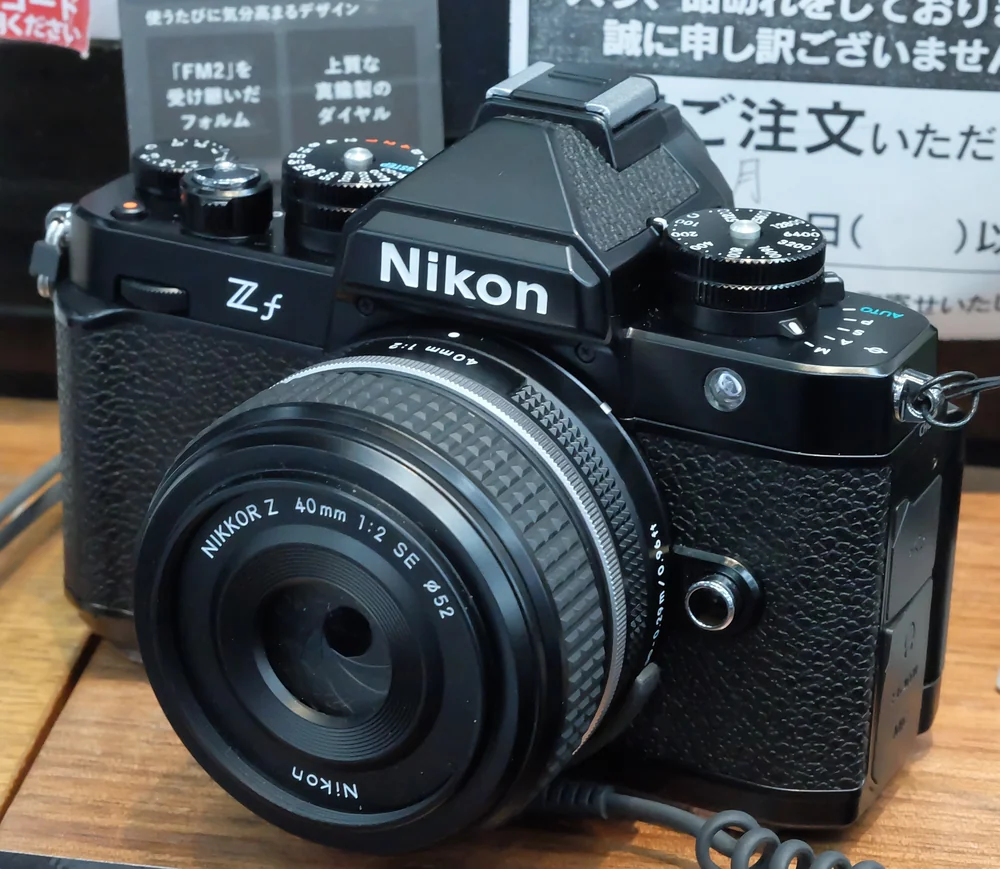

The Zf makes sense if you want to build around full-frame Nikon Z lenses. Nikon lists a 24.5 MP sensor, five-axis stabilization and two card slots, one SD and one microSD. Check the manual if you want a particular backup arrangement.
Try its controls before buying. DPReview found handling less fluid than the Z6 series and noted the missing autofocus joystick. Moving the focus point quickly may matter more to you than the camera’s appearance. The review also reports rolling-shutter distortion in full-width video during fast motion.
OM System OM-5 Mark II
Product photo loads from Amazon when available.
Check OM System OM-5 Mark II on Amazon.com
For outdoor walks in changeable weather, consider the OM-5 Mark II with a compatible sealed lens. OM System lists IP53 body protection under its stated conditions, five-axis stabilization and USB-C charging. It is weather resistant, not waterproof.
Amateur Photographer confirms the updated menus and USB-C connector, but notes that single-shot resolution remains in the 20 MP class. Face and eye detection are available; animal, bird and vehicle detection are not. Check lens support carefully if mixing Micro Four Thirds brands, since physical fit does not guarantee coordinated stabilization or computational features.
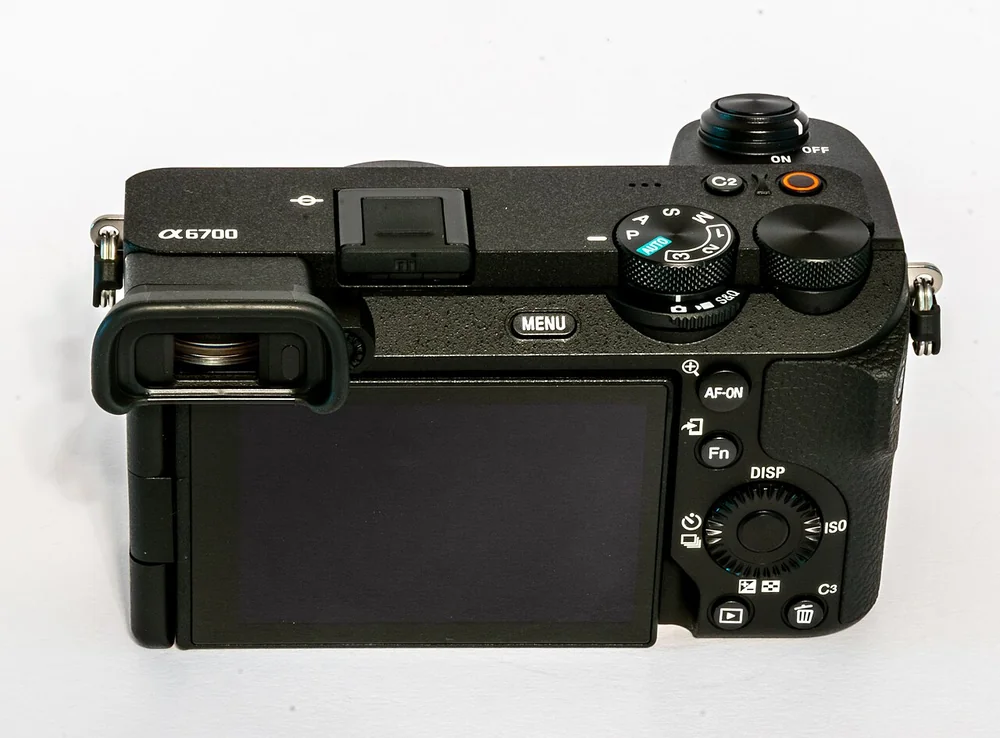
Sony a6700
.jpg)
Check Sony a6700 on Amazon.com
Choose the a6700 if street stills and video both matter to you. Sony lists a 26 MP APS-C sensor, five-axis stabilization and 4K recording at 120 frames per second for slow-motion plans. That mode crops the view, so check framing with your intended E or FE lens.
PCMag notes one SDXC slot, no focus joystick and a tracking burst limit of 11 frames per second. It also reports possible overheating during video. For mostly stills, try focus-point selection first; for long recordings, give the heat warning more weight than the slow-motion specification.
Buying criteria specific to street photographs
Pick a field of view before a brand
Look at the photographs you want to make. Are you including surroundings, or isolating a detail across the street? The GR IV and X100VI lock you into different views. They cannot be presented as interchangeable zoom systems. If your answer changes often, start with a flexible lens setup rather than buying a fixed-lens camera for its reputation. Our beginner camera guide compares viewfinders, screen-only bodies and stabilization if you are still working out your method.
Separate screen preference from camera size
The GR IV lacks a built-in viewfinder, and the X-M5 has no viewfinder. If bringing a camera to your eye is central to your method, those are meaningful exclusions. If screen composition is your preference, do not pay for a different approach solely because another photographer calls it more serious.
Check the complete kit and your controls
For interchangeable-lens cameras, choose the actual lens before judging discretion or portability. A body photograph cannot show the kit’s carrying burden. Also check the control you use most, whether that is focus-point selection, shutter speed or exposure compensation. The Zf and a6700’s missing joysticks are useful cautions, not proof that either is unusable.
Plan one long walk, not one short demonstration
Plan charging and spare power for the walk you actually take. Ricoh’s roughly 250-image battery rating for the GR IV is a test figure, not a full-day promise. OM-5 Mark II uses USB-C charging. Include power accessories when judging what fits in your bag. For hiking or water activities, compare the protection limits in our travel camera guide.
Street-photography questions
Is 28 mm equivalent better than 35 mm equivalent?
Neither is universally better. The GR IV’s wider view includes more surroundings from the same position; the X100VI’s view is tighter. Choose based on your preferred framing rather than a general street-photography rule.
Can I replace the lens on GR IV or X100VI?
Neither has an interchangeable photographic lens mount. Their fixed-lens design is part of the commitment. If conventional lens changes are essential, choose another candidate.
Does stabilization freeze pedestrians?
No. Stabilization addresses camera movement, not the subject’s movement. You still need an appropriate shutter speed for the photograph you want.
Is a high burst rate necessary?
No. Timing and focus strategy can matter more than maximum speed. A fast burst is little help if the camera cannot keep your subject in focus.
Which street camera should you buy?
Start with GR IV for a fixed wide view or X100VI for a tighter one. Choose X-T5 for detailed stills with lens flexibility, and X-M5 only if screen-only shooting suits you. Zf is the full-frame option, OM-5 Mark II suits a supported weather-resistant kit, and a6700 makes sense when video is part of the job. Try the controls and settle the lens before ordering.
Sources and specifications
These recommendations use published specifications and exact-model reviews. Prices, stock, complete-kit size and all-day battery endurance were not verified.
- Ricoh GR IV specifications
- TechRadar GR IV review
- Fujifilm X100VI specifications
- DPReview X100VI review
- Fujifilm X-T5 specifications
- DPReview X-T5 review
- Fujifilm X-M5 specifications
- DPReview X-M5 review
- Nikon Zf manual
- DPReview Zf review
- OM System OM-5 Mark II product page
- Amateur Photographer OM-5 Mark II review
- Sony a6700 specifications
- PCMag a6700 review
Related guides
Best camera for beginners: seven choices for learning photography
Compare seven beginner camera candidates by viewfinder, stabilization, learning controls and lens-system commitments, with clear drawbacks and research sources.
Best camera for landscape photography: detail without the wrong kit
Seven research-based landscape camera picks, comparing single-shot detail, lens-system choices and field workflow without unsupported dynamic-range rankings.
Best camera for portraits: choose for the session, not skin-tone claims
Seven portrait cameras for learning, controlled sessions and hybrid work, with lens-system tradeoffs, useful drawbacks and lighting checks before buying.