
Best camera for beginners: seven choices for learning photography
Start with the Canon EOS R50 for a stills-first learning camera, unless in-body stabilization or a different lens system matters more than simplicity.
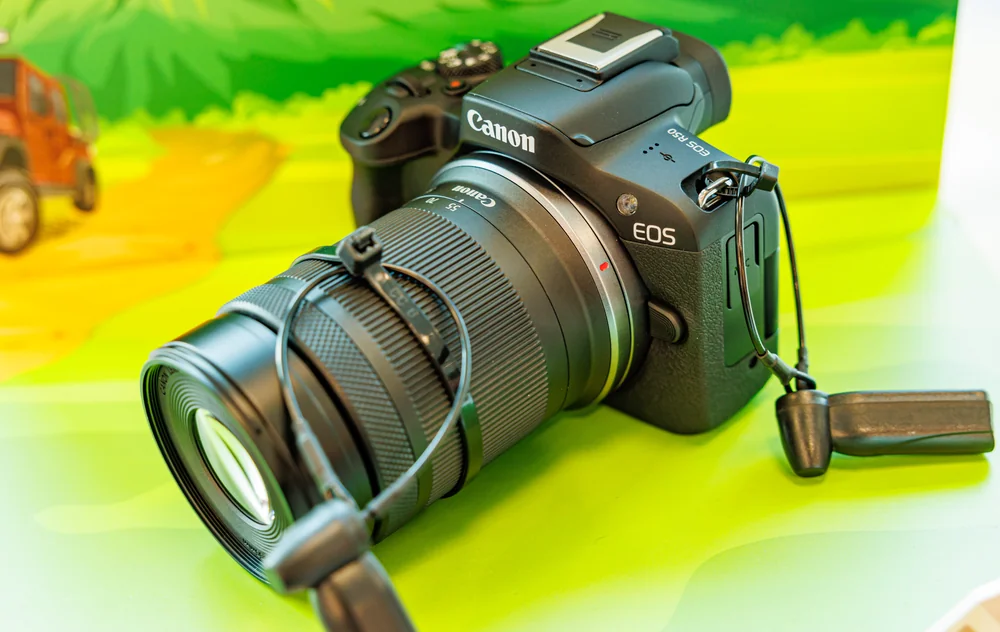

Start with the Canon EOS R50 if you want to learn photography rather than build a kit around video or fast action. Its 24.2-megapixel APS-C sensor is a useful starting point for stills. APS-C describes the sensor size, which affects how a lens frames the scene.
The R50 has no in-body image stabilization, often shortened to IBIS. That means the sensor does not move to compensate for shaky hands. A suitable stabilized lens can help, or choose the Sony a6700 or Fujifilm X-S20 if you want stabilization in the body. The Nikon Z50II suits learners who want both a viewfinder and a flip-out screen; the X-M5 is for those happy to compose on the screen alone.
These recommendations draw on specifications and independent reviews.
We may earn a commission from qualifying purchases through the Amazon.com links. These recommendations are body-only, so budget for a lens too. Before ordering, check the full model name, contents, condition, seller, delivery date and regional warranty.
Compare the learning tradeoffs
Choose the row that matches what you want to learn. The sources behind the specifications and review findings are collected at the end.
| Camera | Learning use | Stabilization decision | Main compromise |
|---|---|---|---|
| Canon EOS R50 | First stills camera | No IBIS; choose lens carefully | Small viewfinder and cramped controls |
| Canon EOS R10 | Learning moving subjects | No IBIS | Buffer and tracking limits for fast wildlife |
| Nikon Z50II | Screen and viewfinder learning | Check the intended lens setup | Battery endurance needs planning |
| Sony a6700 | Stills and video learning | Five-axis sensor stabilization | No focus joystick; video heat risk |
| Fujifilm X-S20 | Stabilized hybrid starting point | Five-axis sensor-shift stabilization | Single card slot; micro HDMI |
| Fujifilm X-M5 | Screen-first learner | No sensor-shift stabilization | No viewfinder; inconsistent tracking |
| OM System OM-5 Mark II | Outdoor learning | Five-axis sensor-shift stabilization | No animal, bird or vehicle subject-detection AF |
Seven candidates, with reasons to choose or pass
Canon EOS R50
Check Canon EOS R50 on Amazon.com
Choose the R50 to learn exposure, composition and lens selection. Canon also specifies uncropped 4K video at 30 frames per second, so you can explore video without that mode narrowing the lens’s view.
Handling is the reason to try it before buying. DPReview found the viewfinder small and the controls cramped. Larger hands may find a different body easier to use. The review also noted a limited buffer, the temporary storage that holds a burst of photographs, and rolling shutter during pans, which can make moving shapes look skewed. For patient subjects and everyday practice, those are less pressing than a comfortable grip and a suitable lens.
Canon EOS R10
Check Canon EOS R10 on Amazon.com
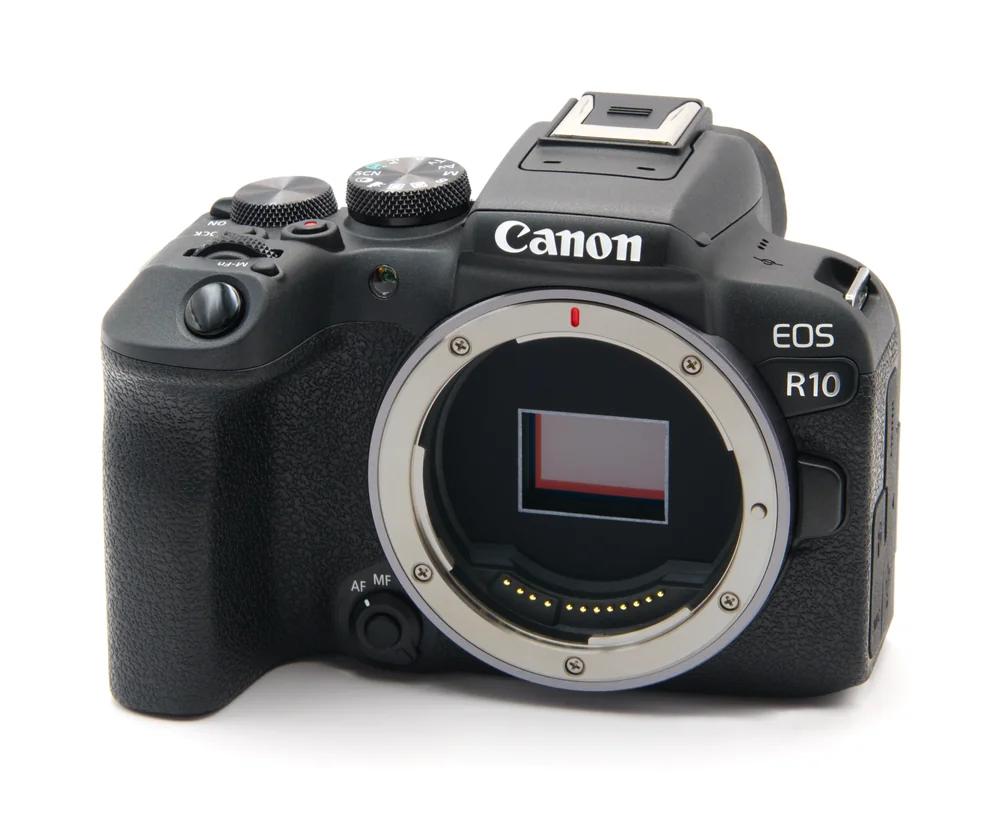
Pick the R10 if moving subjects are already part of your plan. Canon specifies a 24.2 MP APS-C sensor and up to 23 frames per second with the electronic shutter. Its separate 30 fps RAW burst mode crops the image, so you get a narrower view. RAW files give you more editing choices than a finished JPEG.
Tom’s Guide found that the buffer and focus tracking limited it with fast wildlife. Buy it to learn timing and bursts, not as a substitute for a professional sports body. It also lacks in-body stabilization, has one card slot and uses plastic construction. Include a suitable lens in the decision.
Nikon Z50II

Check Nikon Z50II on Amazon.com
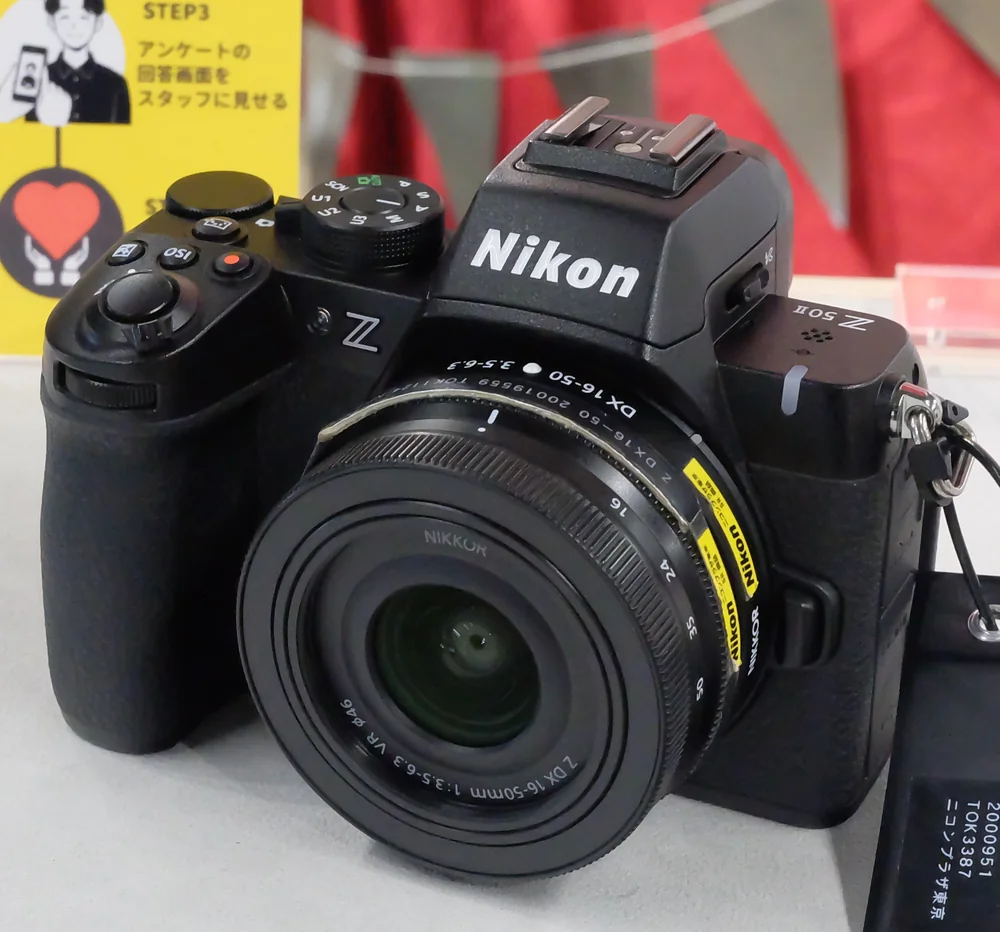
The Z50II gives you two ways to compose, through an eye-level viewfinder or on a flip-out touchscreen. Nikon’s 20.9 MP DX sensor is its APS-C format. For video, 4K at 30 fps uses the full width, while 60 fps crops the view. Keep that change in mind when choosing a lens.
PCMag reports mediocre battery life and no focus joystick, so plan power for a long outing and try moving the focus point yourself. Its pre-capture feature, which saves frames from before you fully press the shutter, is JPEG-only. It will not provide that safety net when shooting RAW.
Sony a6700
.jpg)
Check Sony a6700 on Amazon.com
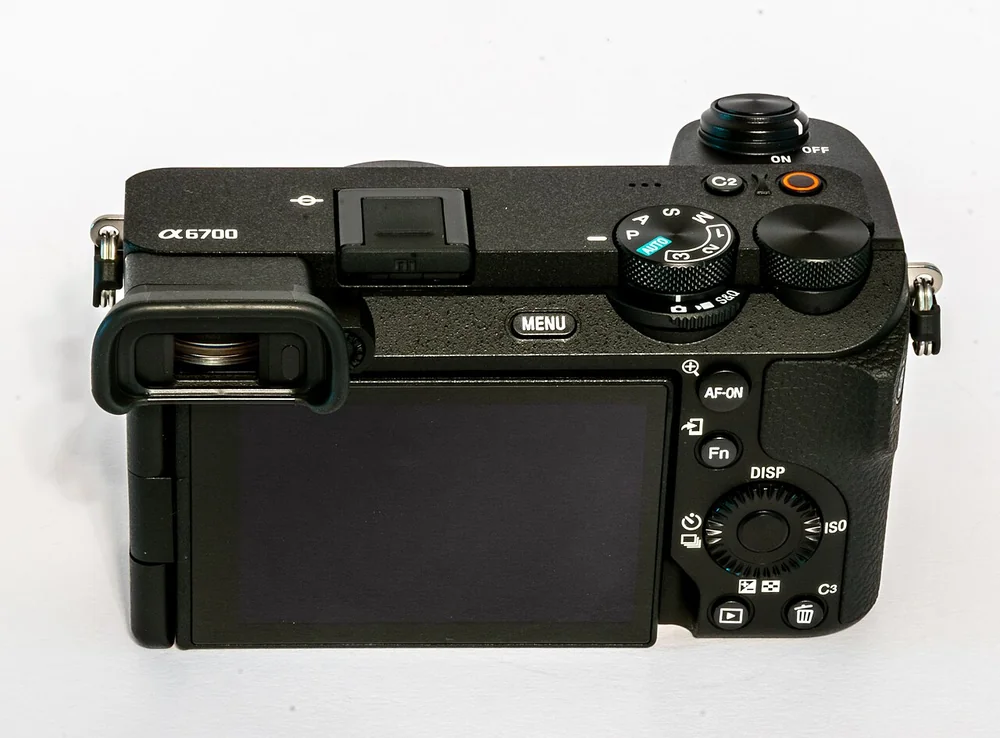
Choose the a6700 if you want to learn both stills and video with stabilization in the body. Sony specifies a 26 MP APS-C sensor and five-axis stabilization, which compensates for several kinds of camera movement. Its 4K at 120 fps is useful to consider for slow-motion work, but it crops the view.
PCMag notes possible video overheating, one SDXC card slot, no focus joystick and an 11 fps ceiling when tracking subjects. The heat warning matters if your plan involves long recordings. For mixed learning, the stabilization is the stronger reason to choose it than the highest video frame rate.
Fujifilm X-S20

Check Fujifilm X-S20 on Amazon.com
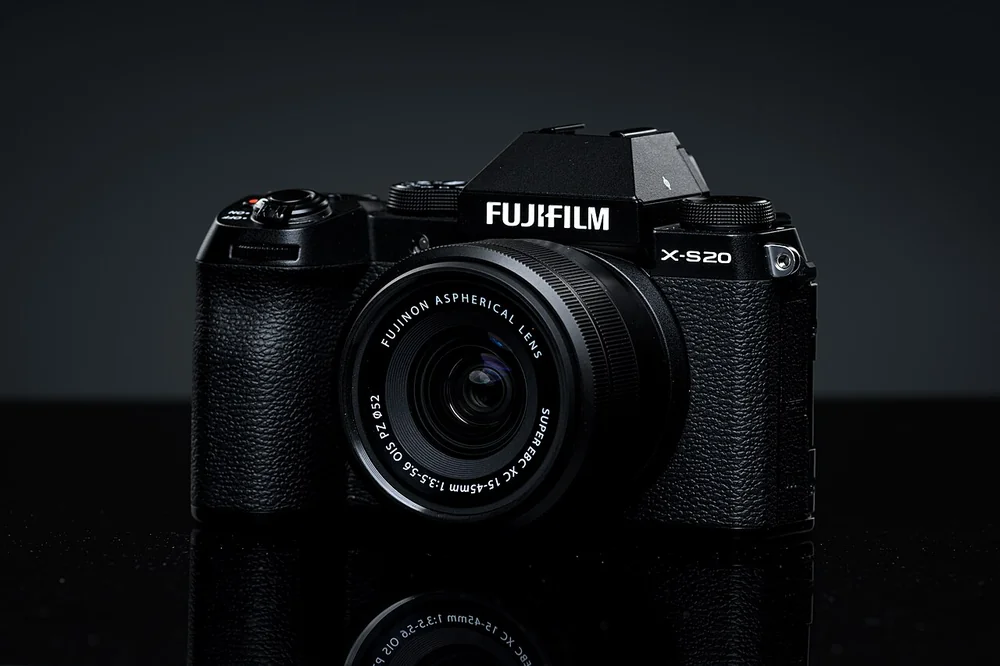
The X-S20 is the stabilized choice if you prefer Fujifilm’s X lens system. Its 26.1 MP APS-C sensor and five-axis stabilization suit a handheld learning kit. Fujifilm also lists automatic and manual focus bracketing, which takes a sequence at different focus distances. You can explore that for close-ups later, but check the lens and processing requirements before planning to combine those frames.
PCMag highlights one UHS-II card slot and a small micro HDMI connector. You cannot save simultaneous backup copies to two cards, and the video connector needs care. Neither limitation needs to dominate a purchase for casual photography practice.
Fujifilm X-M5

Check Fujifilm X-M5 on Amazon.com
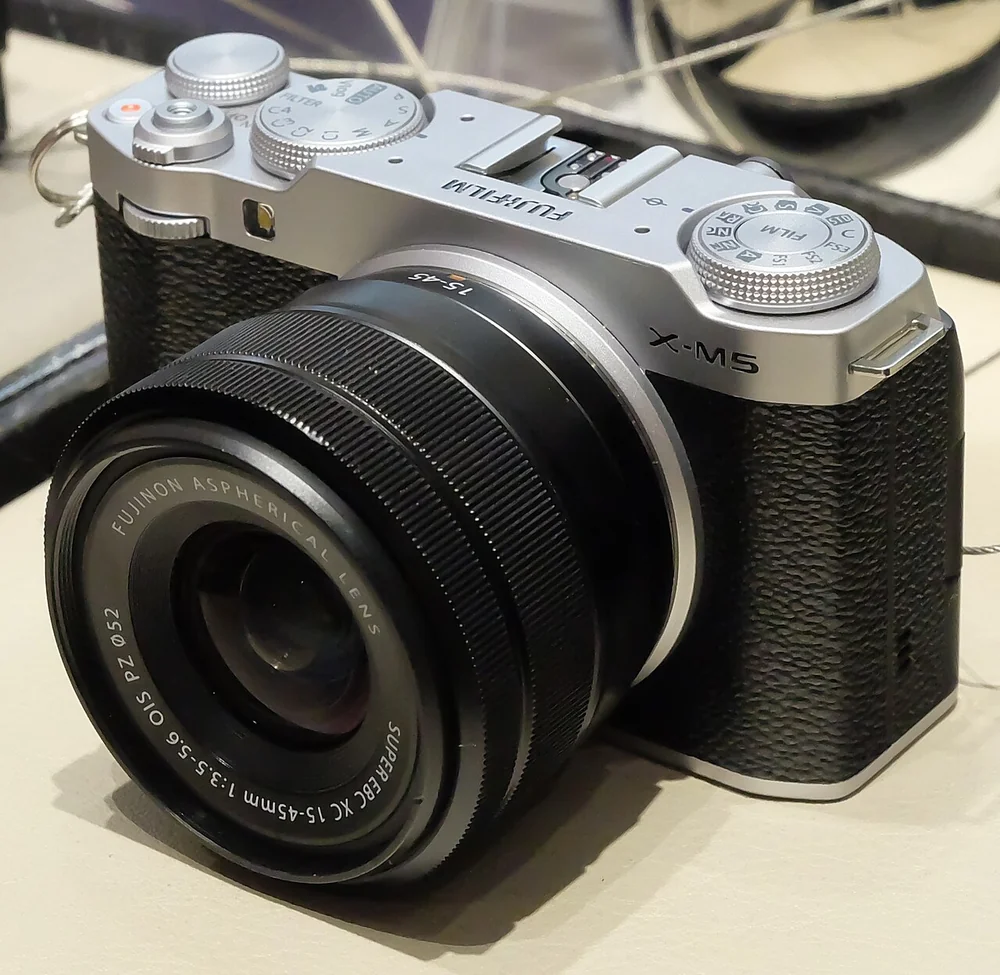
Choose the X-M5 only if you are happy composing on a screen. It has neither a viewfinder nor sensor-shift stabilization. Its 26.1 MP APS-C sensor and 6.2K open-gate video give you room to explore stills and video; open gate records the sensor’s fuller shape rather than a wide video crop.
DPReview found focus tracking inconsistent when the speed of an approaching subject changed. That makes it a less convincing choice for moving children or sport. If you want eye-level composition or stabilization in the body, cross it off rather than compromise on how you will use the camera.
OM System OM-5 Mark II
Product photo loads from Amazon when available.
Check OM System OM-5 Mark II on Amazon.com
Pick the OM-5 Mark II for an outdoor learning kit built around compatible lenses. OM System lists a 20 MP-class Four Thirds sensor, five-axis stabilization, USB-C charging and conditional IP53 weather protection. Pair it with a compatible sealed lens. The rating is not permission to submerge the camera or attach any lens in bad weather.
Amateur Photographer confirms the updated menus and USB-C connector. The review also notes face and eye detection but no animal, bird or vehicle detection. That is the main reason to choose another body if wildlife is what you want to learn first.
What to decide before buying
Buy a learning kit, not an isolated body
Write down the lens you will use most, then compare complete kits. A body-only search excludes the lens, memory card and other essentials. No pick here is a promised budget winner. A cheaper body can still be the wrong purchase if the lenses you need are unsuitable or unavailable locally. If photographing people is your starting point, compare the lens and handling priorities in our portrait camera guide.
Choose a composition method you will use
A screen-only body is not a step down for everyone. It is a deliberate choice. If eye-level composition matters to you, cross the X-M5 off first rather than try to solve its missing viewfinder with wishful thinking. Handle candidates if possible and check whether you can change exposure settings without losing your grip.
Understand what stabilization cannot fix
Sensor or lens stabilization addresses camera movement. It does not stop a moving subject. Learn shutter speed alongside stabilization rather than treating IBIS as a substitute for exposure decisions. For a camera without IBIS, verify the exact lens’s stabilization support before buying a kit.
Check old lenses by exact mount
Do not assume a familiar brand name means a lens fits. Check the exact lens mount, camera model and any required adapter in the manufacturer’s compatibility documentation. Autofocus and stabilization support need separate confirmation. If you will share the camera between photographs and a channel, our vlogging camera guide explains the recording crops and support choices that can change your lens decision.
Beginner questions
Should I start with full frame?
No. None of these seven is full frame, and you do not need a full-frame sensor to learn exposure or composition. Choose a comfortable body and a lens suited to the subjects you want to photograph.
Do I need in-body stabilization?
It is useful to consider for handheld stationary subjects, but it is not mandatory for learning photography. The R50 and R10 lack it. Compare a suitable stabilized lens and your shooting habits before ruling them out.
Is the highest megapixel count the best choice?
No. Resolution is only one specification. A viewfinder you like, controls you can reach and a lens suited to your subject can matter more to daily practice than a small difference in pixel count.
Can I use the Amazon search to choose any matching result?
No. Check the full model name, body-versus-kit contents, condition, seller, warranty and delivery region. Search results can include accessories and different variants. A search destination does not confirm the item sold at checkout.
Recommendation and method
Start with the R50 for stills-first learning. Prefer the X-S20 or a6700 when sensor stabilization is a firm requirement, the Z50II when its viewfinder and flip-out screen fit your habits, or the OM-5 Mark II for a supported outdoor kit if you accept its subject-detection limits. The X-M5 is a conscious screen-only choice, not a universal beginner recommendation.
Specifications come from manufacturers; the drawbacks attributed to reviewers come from their exact-model reviews. Prices and availability should be checked when you buy.
Sources and specifications
- Canon EOS R50: Canon specifications, DPReview review.
- Canon EOS R10: Canon specifications, Tom’s Guide review.
- Nikon Z50II: Nikon manual, PCMag review.
- Sony a6700: Sony specifications, PCMag review.
- Fujifilm X-S20: Fujifilm specifications, PCMag review.
- Fujifilm X-M5: Fujifilm specifications, DPReview review.
- OM System OM-5 Mark II: OM System product page, Amateur Photographer review.
Related guides
Best camera for landscape photography: detail without the wrong kit
Seven research-based landscape camera picks, comparing single-shot detail, lens-system choices and field workflow without unsupported dynamic-range rankings.
Best camera for portraits: choose for the session, not skin-tone claims
Seven portrait cameras for learning, controlled sessions and hybrid work, with lens-system tradeoffs, useful drawbacks and lighting checks before buying.
Best camera for sports photography: compare usable bursts, not headline speed
Seven sports camera candidates with RAW and shutter-mode distinctions, lens compatibility cautions and specific questions for indoor and outdoor action.